Your travel agency for the Moroccan Desert:
About us
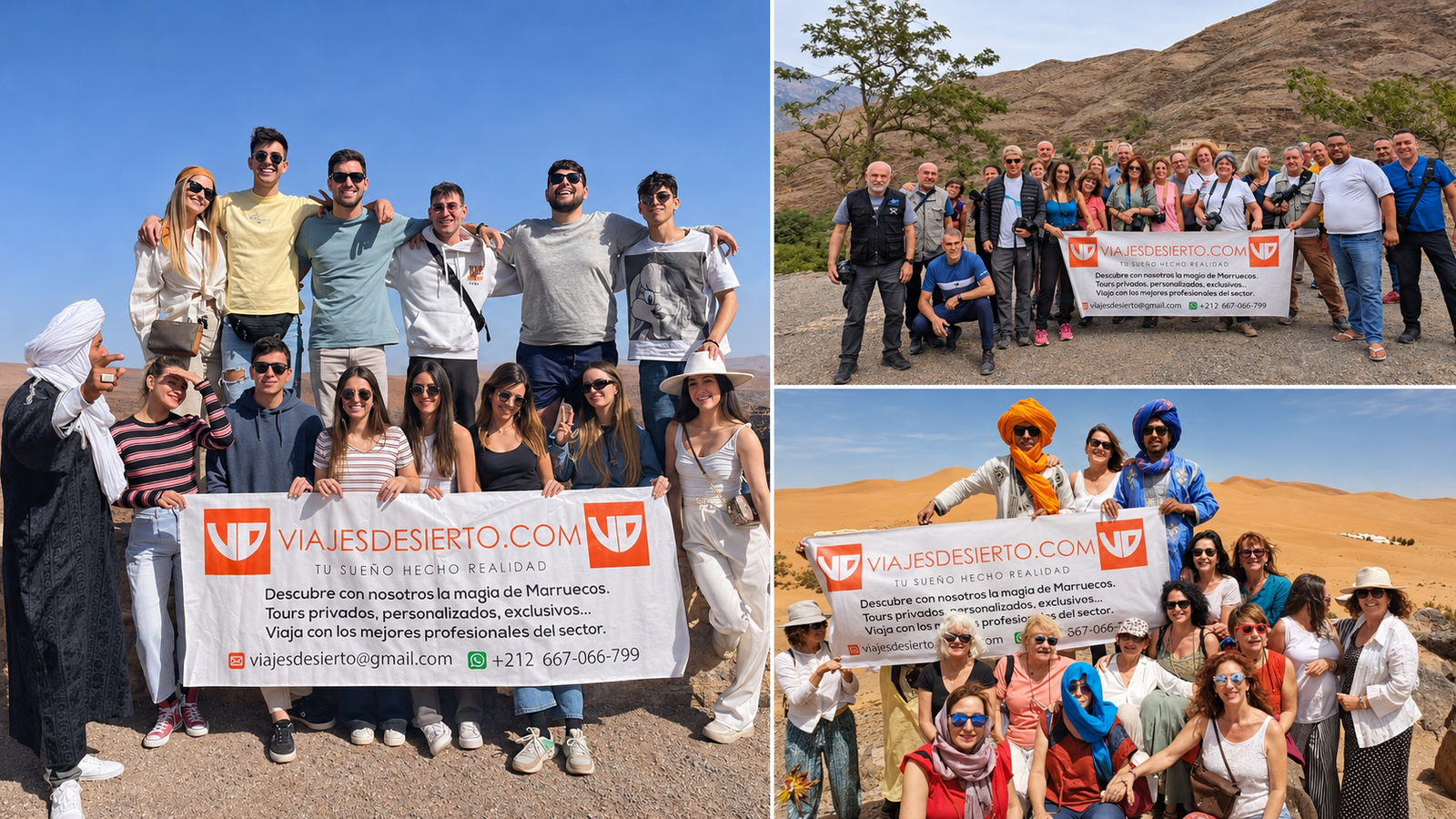
We are a family business of young people born and raised in the town of Ramlia located southeast of the Desert of Morocco. Our Berber origins allow us to say that we are experts in the Moroccan Sahara Desert, its changing winds and sands, and that over the years we have become specialists in organizing tours, excursions and itineraries.
Our motto is Another way to Travel It's possible. We like that the traveler finds the real Morocco It's not just about experiencing its wonderful and exotic landscapes, nature, towns, and cities. A true country is known through its people, its culture, and customs; that's why during our organized trips to Morocco You will be able to experience it and be surprised by the different perspectives on life.

Nuestras rutas por Marruecos sugeridas por cantidad de días (1-2-3-4-5-8 dias…) y circuitos te permitirán viajar de una manera relajada, sin depender de un grupo, ya que nuestro servicio es personalizado para tu familia, pareja, amigos en cómodos vehículos 4×4 que facilitan el recorrido por todo tipo de caminos.
Our Berber drivers and guides will accompany you throughout the journey, providing excellent service and attention to everything you need.
These tours in Morocco include a camel ride to the Berber tent camps in the middle of the dunes, where you can enjoy dinner, music and a night under the stars.
During the tour you can arrange the departure from any place you choose towards the desert: Routes from Marrakech to the Desert, Routes from Fez to the Desert, Routes from Tangier to the Desert, Routes from Casablanca to the Desert, Routes from Ouarzazate to the Desert, we will also pass through imperial cities, valleys, mountain ranges and mountains, depending on your availability of time and your choice of route.
Tell us what places you would like to visit, when and what type of trip you would like to take, and we will do everything we can to make your stay unforgettable.
Come and enjoy Morocco with Desert Trips
Trips to the Moroccan desert: a complete guide to experiencing the authentic Sahara


The trips to the Moroccan desert They are one of the most breathtaking experiences you can have in North Africa. Sleeping under the stars, exploring endless dunes on a camel, and discovering Berber culture make the Sahara Desert a unique and unforgettable destination.
In ViajesDesierto, We organize authentic and personalized routes so you can discover the Moroccan desert safely, comfortably and adapted to your travel time.
Why take a trip to the Sahara Desert in Morocco?
The Moroccan Sahara offers a perfect combination of adventure, nature and tradition. Unlike other deserts around the world, here you can enjoy complete experiences in just a few days.
Main reasons to travel to the Moroccan desert
-
Spectacular landscapes of golden dunes
-
Sunset Camel Experience
-
Overnight stay in traditional or luxury campsites
-
Berber culture and music under the stars
-
Ideal for couples, families and adventurous travelers
The best deserts in Morocco to visit
Merzouga Desert (Erg Chebbi)
It is the most famous desert in Morocco, known for its high dunes and its stunning natural surroundings. Ideal for those seeking a complete Sahara experience.
Advantages of Merzouga:
-
Tall and photogenic dunes
-
Luxury camps available
-
Most spectacular camel experience
Zagora Desert
Closer to Marrakech, it's a perfect option for short trips or 1 or 2 day excursions.
Advantages of Zagora:
-
Fewer hours on the road
-
Ideal for quick getaways
-
Authentic and peaceful experience
Types of trips to the Moroccan desert
In ViajesDesierto We offer different options depending on your preferences:
Private desert tours
The most recommended option. Includes private vehicle, driver-guide, and complete flexibility in stops, schedules, and tour end.
Shared excursions
More economical, ideal for travelers on a tight budget.
Luxury desert trips
Premium camps, tents with private bathroom and exclusive services.
Family travel
Adapted routes, comfortable accommodations and relaxed paces for traveling with children.
Most popular itineraries to the Moroccan desert
2-day desert tour
-
Ideal for travelers with limited time
-
Departures from Marrakech or Fez
-
Option to end the tour in another city
3-day desert tour
-
The most balanced
-
It includes kasbahs, oases and valleys
-
More time in the dunes
Long tours in Morocco
-
They combine imperial cities and desert
-
Routes of 5, 7, 10 or more days
-
Complete nationwide experience
What does a trip to the Moroccan desert include?
Generally, trips to the desert include:
-
Transportation in a comfortable, air-conditioned vehicle
-
Expert driver-guide
-
Camel ride
-
Night camping in the desert
-
Traditional dinner and breakfast
-
Personalized attention throughout the tour
Best time to travel to the Moroccan desert
-
Spring (March to May): ideal climate
-
Autumn (September to November): pleasant temperatures
-
Summer: Intense heat, but manageable with adapted schedules
-
Winter: mild days and cold nights in the desert
Tips for traveling to the Sahara Desert
-
Wear comfortable, layered clothing.
-
Protect yourself from the sun (sunglasses, hat, sunscreen)
-
Closed shoes for walking on sand
-
Camera or mobile phone with a good battery
-
Book with a specialized agency
Why choose ViajesDesierto for your trip to the Sahara?
✔ Especialistas en viajes al desierto de Marruecos
✔ Tours privados y a medida
✔ Guías locales con experiencia
✔ Salidas desde Marrakech, Fez, Casablanca y Tánger
✔ Posibilidad de finalizar el tour en otra ciudad
Organizing a desert trip with local experts makes all the difference between a simple journey and an unforgettable experience.
Frequently asked questions about traveling to the Moroccan desert
Is it safe to travel to the Moroccan desert?
Yes, it is completely safe if done with a professional agency and experienced guides.
How many days do I need to visit the desert?
Ideally, 2 or 3 days, However, longer tours are recommended for a more complete experience.
Can you really sleep in the desert?
Yes, you sleep in camps located among the dunes, with all the necessary amenities.
Can I start the tour in one city and finish it in another?
Yes, many travelers begin the tour in Fez and they finish it in Marrakech, or vice versa.
Discover the best cities with Viajes Desierto pretty ones Morocco

Marrakech
What to see in the city of Marrakech:
When visiting Marrakech, travelers can explore the famous medinas and souks and experience all sorts of exotic sights, such as snake charmers, traditional music, and acrobatic performances. The fragrant markets invite visitors to take a closer look at the spices and food offered by the vendors. Clothing, handicrafts, and jewelry can also be purchased there.
Nestled in the majestic Atlas Mountains, Marrakech, the capital of Moroccan culture and a land of Islamic art, is brimming with sun-drenched historical sites steeped in Berber tradition. Here's a list of the best tourist activities to awaken your senses in the heart of Marrakech.
-
The Marrakech Museum
The former Mnebbi Palace, now the Marrakech Museum, hosts exhibitions of Moroccan art, from antiquity to the present day. It also houses historical artifacts, coins, and pottery from the region.
-
Jemaa el-Fna Square
In the vast historic market of Jemaa el-Fna square, bartering is the norm, allowing you to buy souvenirs, local specialties, and clothing. Not far away, you can venture into the medina (old city) and its labyrinth of traditional souks.
-
The Bay Palace
The word «Bay» means «bright.» Built for a former slave who became the sultan's favorite, the Bahia Palace was intended to be the most sumptuous of its time.
-
The Menara:
With the Atlas Mountains as a spectacular backdrop, the Menara, a haven of peace, is very popular with locals and visitors alike to escape the noise of the city.
-
Saadian Tombs:
The immense Saadian tombs, dating from the 16th century, serve as the final resting place for the 66 members of the Saadian dynasty, who ruled Marrakech from 1524 to 1668.
-
The Majorelle Garden:
This sublime tropical garden was founded by the French painter Jacques Majorelle, which explains why the green of nature blends with Majorelle blue.
-
The Koutoubia Mosque:
With its 70-meter-high minaret visible for miles around, the Koutoubia Mosque is Marrakech's most famous landmark. If you want to visit, keep in mind that only Muslims are allowed inside!
-
The Dar Si Said Museum
Within the walls of this beautiful old palace, trace the evolution of North African art through the centuries. And if your visit has whetted your appetite, head to Maison Tiskiwin, located nearby, where you'll discover the art of living in the Sahara.
Southeastern Morocco
 Ait ben Haddou

Situado a 30 km de Ouarzazate viniendo de Marrakech, el pueblo de Aït-Benhaddou ofrece un impresionante espectáculo de capas rocosas. Es uno de los ksar mejor conservados de todo el sur de Marruecos, catalogado como Patrimonio de la Humanidad por la UNESCO en 1987. Un laberinto de callejones y pasillos abiertos se entrelazan entre las frágiles casas de adobe. El lugar fue utilizado para el rodaje de varias películas como Asterix y Obelix: Mission Cleopatra, Lawrence of Arabia, Gladiator …, y series de mundialmente famosas como Juego de Tronos.
 The famous Todra Gorges:
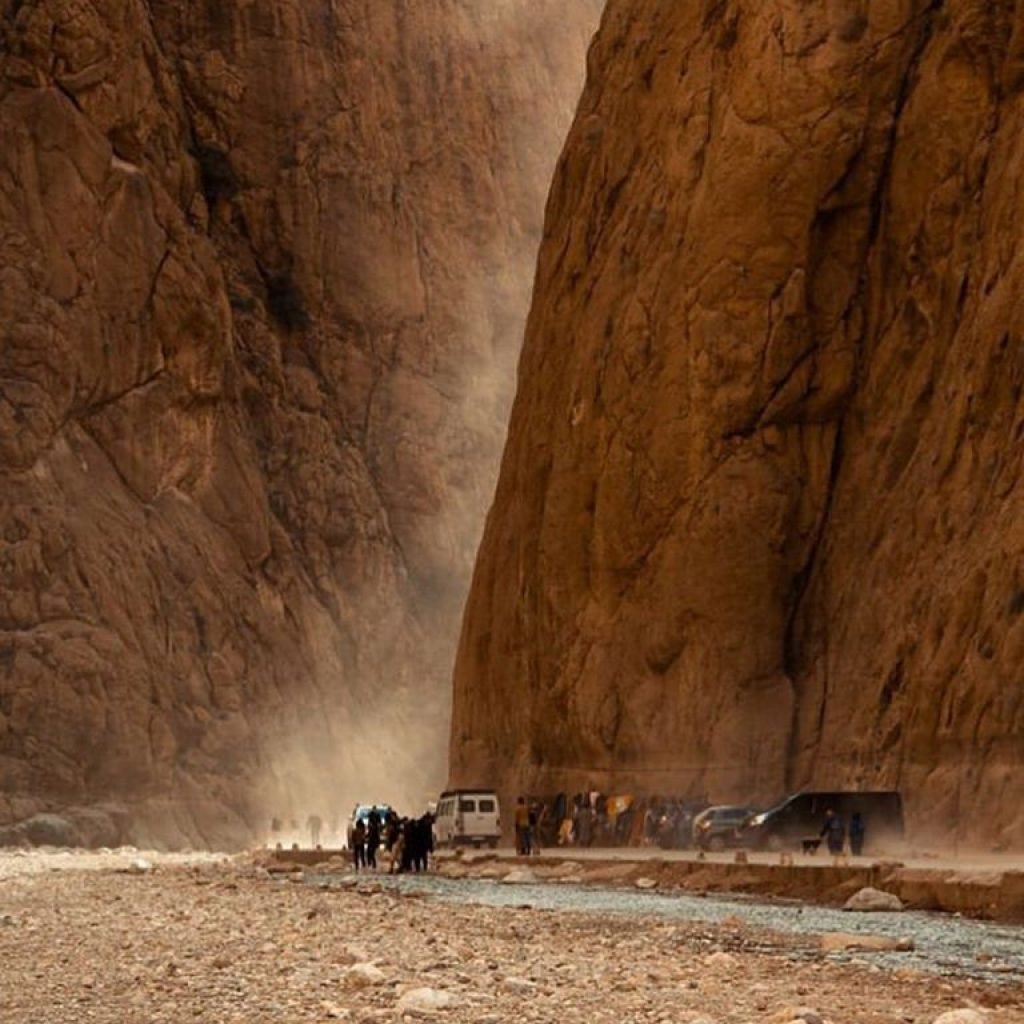
15 km from the center of Tinghir, gateway to the High Atlas, the villages of Tamtatoucht and Imilchil, the Todra gorges, high limestone cliffs that look like a fault carved by the wadi of Todra over millennia, impress with their spectacular drop plunging down to the riverbed.
With peaks rising up to 300 meters above the Todra River that winds its way from its source in the High Atlas Mountains, the Todra Gorge occupies a prime place in the valley.
The Dades Valley and Gorges:

The Dades Valley and Gorges, stretching 25 km, is one of the most captivating in southern Morocco. It lies between Boumalne and Imdiazen. The landscapes are breathtaking, the houses blend seamlessly into the rock, and the Dades wadi unfolds gently from the high limestone plateaus. Don't miss sunset: the Dades Gorges reveal their full splendor.
 Valley of Roses:

The Valley of Roses gets its name from the many roses cultivated there, specifically Damask roses, which only bloom twice a year, from late April to June. It could also be called the “pink valley” because of the color of its soil. Wonderful landscapes.

Fez
Fez is the heir to Andalusian culture and the cradle of the ancient Sharifian Empire. The city is divided into three parts: Fes the Young (not particularly interesting), Fes the Middle Ages, built in the 13th century by the Marinids, and Fes the Ancient, dating back to the late 8th century. Fascinating and charming, traditional yet embracing modernity, a visit to this city and its Medina is worth several days.
What to see in the city of Fez:
The souk of Fez
It has existed for hundreds of years and seems to have changed very little. This is what makes it so charming, so endearing. As Fez is a city of crafts, its souk is teeming with artisans vying for the best souvenirs to take home, such as pottery, ceramics, and even jewelry. Don't forget to stroll through the dyers' souk—a real change of scenery!
The Karaouiyne Mosque
This university, the oldest in the Arab world, was founded in 859 AD. Although entry is forbidden to non-Muslims, it remains a spiritual mecca today. Discover its exterior and the details that adorn its walls, its 270 columns, and its 24 gates surrounding an inner courtyard.
Madrasas
A madrasa is a former Koranic school that serves as a boarding school for students. In Fez, they are numerous and equally prestigious, especially in terms of their decorations. Therefore, be sure to visit the Attarine Madrasa, located opposite the Karaouiyne Mosque. It is undoubtedly one of the most refined madrasas in the Muslim world, where lovers of calligraphy, mosaics, and marquetry will be amazed. There is also the Bou Inania Madrasa: a very impressively large madrasa, certainly one of the most exquisite buildings in the city. Another madrasa worth discovering is the Seffarine Madrasa, the oldest in Fez, dating back to 1280. Its decoration is reminiscent of traditional Moroccan houses.
The gates of the medina
There are two large gates available when you want to enter the medina: Bab Bou Djeloud (pictured) and Bab Dekatène. Bab Bou Djeloud is the main gate and the official entrance to the medina, while the other gate, with its castle-like appearance, is where criminals were tried during the Middle Ages.
The Royal Palace
It is the oldest palace in Morocco and arguably the most important. Built in the 14th century, it is called Dar El Makhzen. Spanning 80 hectares, it was originally built outside the old medina and is now located near the Jewish quarter and the Mellah. Although visits are not permitted, a trip there is worthwhile to discover its vast esplanade, where you can admire the grand bronze gates framed with ceramic tiles. The gates are open seven days a week, corresponding to the seven levels of the Moroccan monarchy.
Dar Batha Palace and Museum
The palace was built by Hassan I because he ardently desired to unite the two cities that make up Fez, namely Fes el-Baki and Fes el-Djedid. This palace was later transformed into a museum of crafts where you can discover 13th-century pottery and ceramics, as well as embroidery and jewelry from the Middle Ages. Don't forget to take pictures of the richly decorated gates and the enormous padlocks that secure them at night.
The tanners' quarter
The city of Fez, Morocco's third-largest city, was founded in the 8th century and today has over a million inhabitants. The city has a distinct, traditional character, especially the old town or medina, called Fes el Bali, which has evolved over centuries. Located behind a high wall, the medina features narrow, pedestrianized streets where hundreds of merchants and artisans sell products such as dates, fish, spices, copper vases, bands, and musical instruments. Fez is also famous for its fine goods, with the souk of the tanners being a particularly majestic sight. The souk houses three ancient tanneries, the largest and oldest being the Chouara Tannery, which dates back thousands of years and is the most famous in the country, with its warehouse at the Bab Debbagh port in Marrakech.
At the Chouara tannery, the hides are first soaked in a mixture of cow urine, quicklime, water, and salt. This caustic mixture helps break down the leather's toughness, loosening excess fat, flesh, and any remaining hair. The hides are submerged in this mixture for two or three days, after which the tanners remove the excess hair and fat by hand to prepare the hides for dyeing. Next, the hides are immersed in another set of vats containing a mixture of water and pigeon droppings. The pigeon droppings contain ammonia, which acts as a softening agent, allowing the hides to become pliable so they can absorb the dye. The tanner uses his bare feet to knead the hides for up to three hours to achieve the desired flexibility.

Meknes
The city of Meknes, a UNESCO World Heritage Site, is one of the four imperial cities. Its verdant minarets and monumental gates of Bab Jemaa el-Nouar and Bab Mansour bear witness to this. The old imperial city houses the mausoleum of Moulay Ismail with its magnificent painted cedar ceilings. The medina also boasts a museum worth visiting, the Dar Jamai Museum, located in a splendid house dating back to 1882. Smaller than its neighbor Fez, Meknes invites visitors to wander its alleyways and discover its hidden gems.
What to see in the city of Meknes:
The granary of Meknes
The city of Meknes boasts a wealth of monuments, testaments to its rich and turbulent history. Among them is the Hri Souani royal granary, dating back to the 17th century. Rent a car and explore the Fez and Meknes region in northern Morocco.
It was in the 17th century that Moulay Ismaïl commissioned the construction of Hri Souani: enormous granaries located 500 meters from the Royal Palace in Meknes. Divided into several halls, the largest of which measures over 26 meters long, 10 meters wide, and 9 meters high, the building has 4-meter-thick walls, allowing the rooms to maintain a constant temperature optimal for food preservation. The granaries are also equipped with wells that were once used both to supply water and to maintain the level of the Souani basin.
The rooms are empty today, but the atmosphere is such that they are used for various events and sometimes even for filming historical movies. In fact, it was here that some scenes from the films «The Last Temptation of Christ» and «Jesus of Nazareth» were filmed. We can then imagine the atmosphere of this place steeped in history and mystery.
A little tip from Hertz Morocco: rent an economical car to visit the city of Meknes and its ancient royal granary Hri Souani.
Mausoleum of Moulay Ismaïl
Visits to the Mausoleum of Moulay Ismail are permitted for non-Muslims (except for access to the sovereign's tomb). This mausoleum was built in 1703 and features a magnificent painted cedar ceiling and mosaics inlaid with Quranic verses.
Bab Mansour Gate:
The Bab Mansour, or Bab Masour el-Aleuj, is a gateway to the city of Meknes. Built in 1732, it is considered one of Moulay Ismail's most beautiful works and is the largest gate in Morocco and North Africa.
It is very well preserved; currently, to enter the city, one does not enter through the gate itself, but from the side. It is designed as a grand triumphal arch, leading to Lalla Aouda Square and the Dar e-Kebira neighborhood.
Its construction began in 1672 by Mulay Ismail and was completed by his son Mulay Adallah in 1732. It measures approximately 16 meters in height and is topped by a pointed horseshoe arch. The decoration consists of mosaics, mostly green, and interlaced motifs.
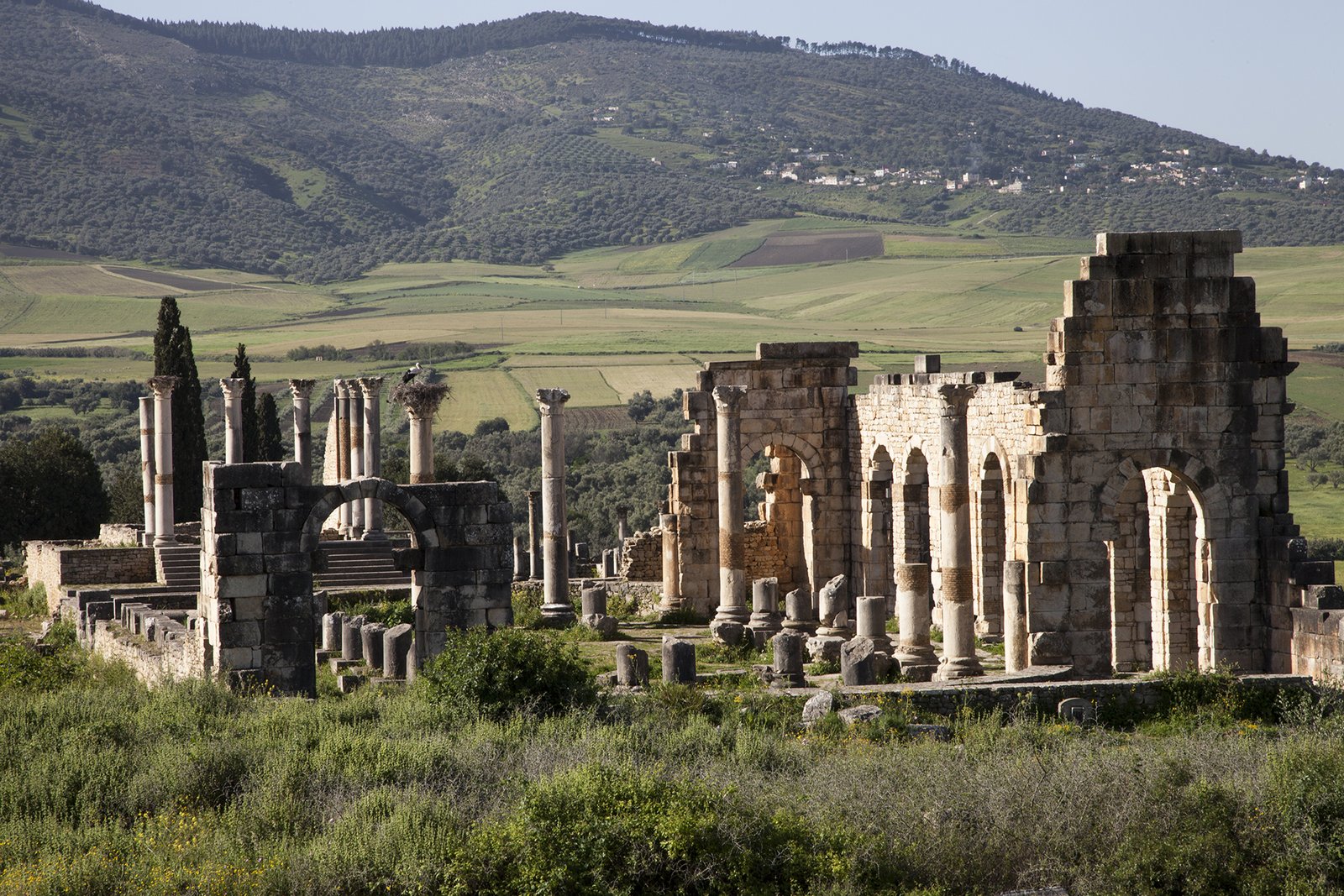
The famous ruins of Volubilis
Volubilis is the beautiful name given to the most important Roman ruins in Morocco. A visit is magnificent and unmissable: the Roman city boasts its capitol, the Arch of Caracalla, its thermal baths, its basilica, and its main thoroughfare lined with villas adorned with exquisite mosaics. Volubilis is a UNESCO World Heritage Site.